When More Becomes Too Much
Amar Pandit , CFA , CFP 

February 24, 2026 | 7 Minute Read
Do you know what will happen to your money after you pass away?
Have you ever paused long enough to ask yourself that question?
Most people never do.
They run faster.
They work harder.
They accumulate more.
They worry endlessly.
But they rarely stop to ask the most important question of all.
Why am I accumulating so much money?
This is not a financial question.
This is a philosophical one.
And it is far more difficult to answer than calculating future value or asset allocation.
Let me share something I have noticed over decades of speaking with investors.
The people who have the most tend to worry the most.
The ones who have already crossed every imaginable financial milestone still lie awake thinking about whether they have enough.
Enough for what?
Enough for whom?
Enough until when?
They never define it.
They simply assume that more must be better.
But is it?
Let us examine this honestly.
Imagine you have food.
More food than you will ever need.
At some point, your body has enough.
Eating more does not make you healthier.
It makes you sick.
Now imagine you store that food.
If it is kept far beyond its useful life, one thing happens.
It rots.
Once it rots, what is its value?
None.
The food served no purpose.
It did not nourish you.
It did not nourish anyone else.
It simply sat there until time took it away.
This is exactly what happens with money that is accumulated without intention.
Money is nourishment for life.
Money is energy.
Money is possibility.
Money is a tool to create a better today and a secure tomorrow.
But when you hoard money far beyond what you can use or enjoy,
without any clarity on its purpose,
without any thought of its destination,
it becomes like stored food that slowly loses meaning.
You cannot take it with you.
You cannot use it after you are gone.
You cannot control it when you no longer exist.
If you do not decide what happens to it, the world will decide for you.
Often in ways you never wanted.
I have met many people who obsess about accumulation.
They check their net worth as if it is a scoreboard.
They treat money like a protective wall around their fears.
They worry endlessly about running out, even when the numbers clearly show they will not.
Thus, they want more.
And then more.
And even more.
But here is the truth they do not want to accept.
The fear will not go away with more money.
Because the fear has nothing to do with money.
The fear is psychological.
The fear is emotional.
The fear is a lack of clarity about life.
More money cannot fill the void created by a lack of purpose.
Let us ask a simple question.
What happens to the money you never spend?
Does it sit in your account forever?
No.
Eventually it moves.
It moves to your children.
It moves to relatives.
It moves to charities.
It moves to taxes.
It moves to lawyers and courts if you have not planned properly.
The money goes somewhere.
The only question is:
Does it go where you want it to go?
If you have no clarity, someone else decides.
Sometimes the wrong person.
Sometimes the wrong purpose.
Your life’s work deserves more thought than that.
People justify accumulation by saying,
I need to feel safe.
I need a buffer.
I need protection.
Of course you do.
Security is important.
A buffer is essential.
A safety net brings peace.
But how much is enough?
If your lifestyle needs thirty crore to be secure,
why does sixty not feel enough?
If sixty does not feel enough,
why does one hundred not feel enough?
Because the fear does not respond to numbers.
It responds only to clarity.
Without clarity, you can keep accumulating and still feel poor.
Some people say,
I am not accumulating for myself.
I am doing it for my children.
Are you sure?
Children rarely need the amount of wealth many parents accumulate.
What they need more is values.
What they need more is wisdom.
What they need more is financial maturity.
You can leave them money.
But if you do not leave them philosophy,
the money becomes a burden rather than a blessing.
Ask yourself honestly.
Are you creating a gift?
Or are you creating a dependency?
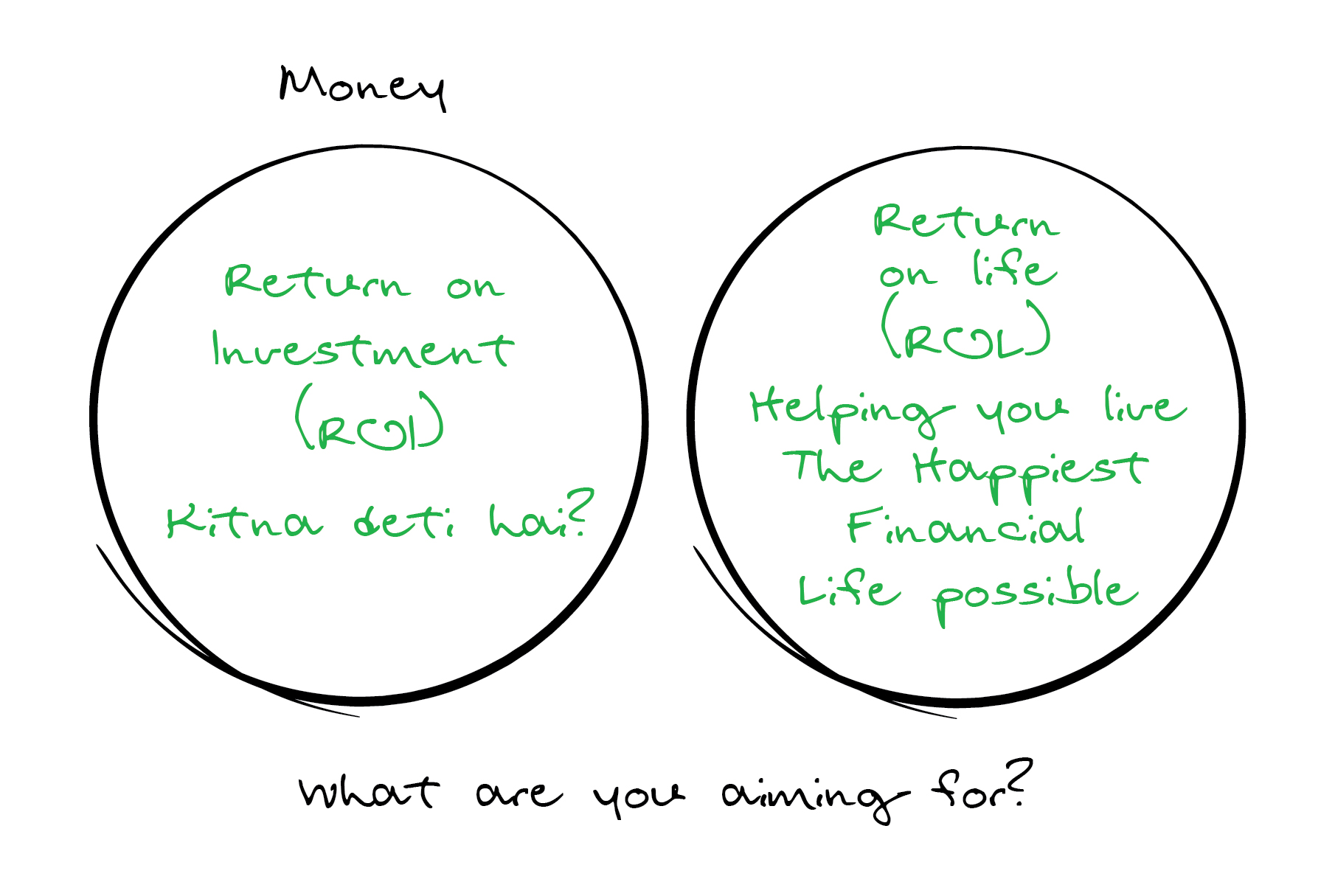
Money can answer every question except this one.
What do you want your life to feel like?
Most people accumulate because they never define the life they want.
So they replace clarity with accumulation.
They replace purpose with numbers.
They replace meaning with metrics.
It is easier to grow wealth than to grow wisdom.
But without wisdom, wealth becomes heavy.
Think of money not as something you own but as something that passes through you.
You are a steward, not a warehouse.
Money is meant to be used.
Money is meant to be experienced.
Money is meant to be directed.
Money is meant to move.
It is energy.
Not stone.
Ask yourself:
What is the purpose of the money I have accumulated?
What is the role of this money in my life?
What is the role of this money in the lives of my family members?
What do I want this money to change?
What do I want this money to protect?
When these answers are clear, you stop accumulating mindlessly.
You start managing intentionally.
When you genuinely have more than enough, three possibilities exist.
First, you can decide to use it meaningfully.
Not recklessly.
Not wastefully.
But meaningfully.
On things that matter.
On experiences that enrich your life.
On people who matter to you.
On causes that reflect your values.
Second, you can structure it intelligently.
Estate planning.
Trusts.
Wills.
Charitable vehicles.
Systems that ensure your money creates impact even after you are gone.
Third, you can free yourself from the pressure of “more.”
And begin focusing on what truly creates joy.
Time.
Health.
Relationships.
Purpose.
Learning.
Freedom.
Wealth should liberate you.
Not imprison you.
Let me ask you something simple,
yet powerful.
If you died tomorrow,
would you feel satisfied with how you used your money today?
Not with how much you accumulated.
But with how much meaning you created.
If the answer makes you uncomfortable,
that discomfort is not a threat.
It is a signal.
A signal to rethink your relationship with money.
A signal to shift from accumulation to intention.
A signal to move from fear to clarity.
Start with one change.
Spend on things that are truly important to you.
Not on things that impress others.
Not on things that fill gaps created by insecurity.
Not on things that add noise to your life.
Spend on what brings you joy.
Spend on what brings you connection.
Spend on what brings you meaning.
Spend on what brings you peace.
But more than spending, decide.
Decide what your money is meant to do.
Decide what your money is not meant to do.
Decide where your money should go after you no longer need it.
Money with purpose creates a rich life.
Money without purpose creates only stress.
Your wealth will outlive you.
That is certain.
The only uncertain part is whether it will outlive you with intention
or outlive you with confusion.
You cannot control life.
You cannot control markets.
You cannot control time.
But you can control what your money means.
You can control the role it plays in your life.
You can control the legacy it creates after you are gone.
Do not let your wealth rot like stored food.
Let it nourish.
Let it energize.
Let it uplift.
Let it serve.
Let it matter.
That is the true purpose of money.
Not to accumulate endlessly,
but to create a life that feels deeply lived.



 and then tap on
0 Comments